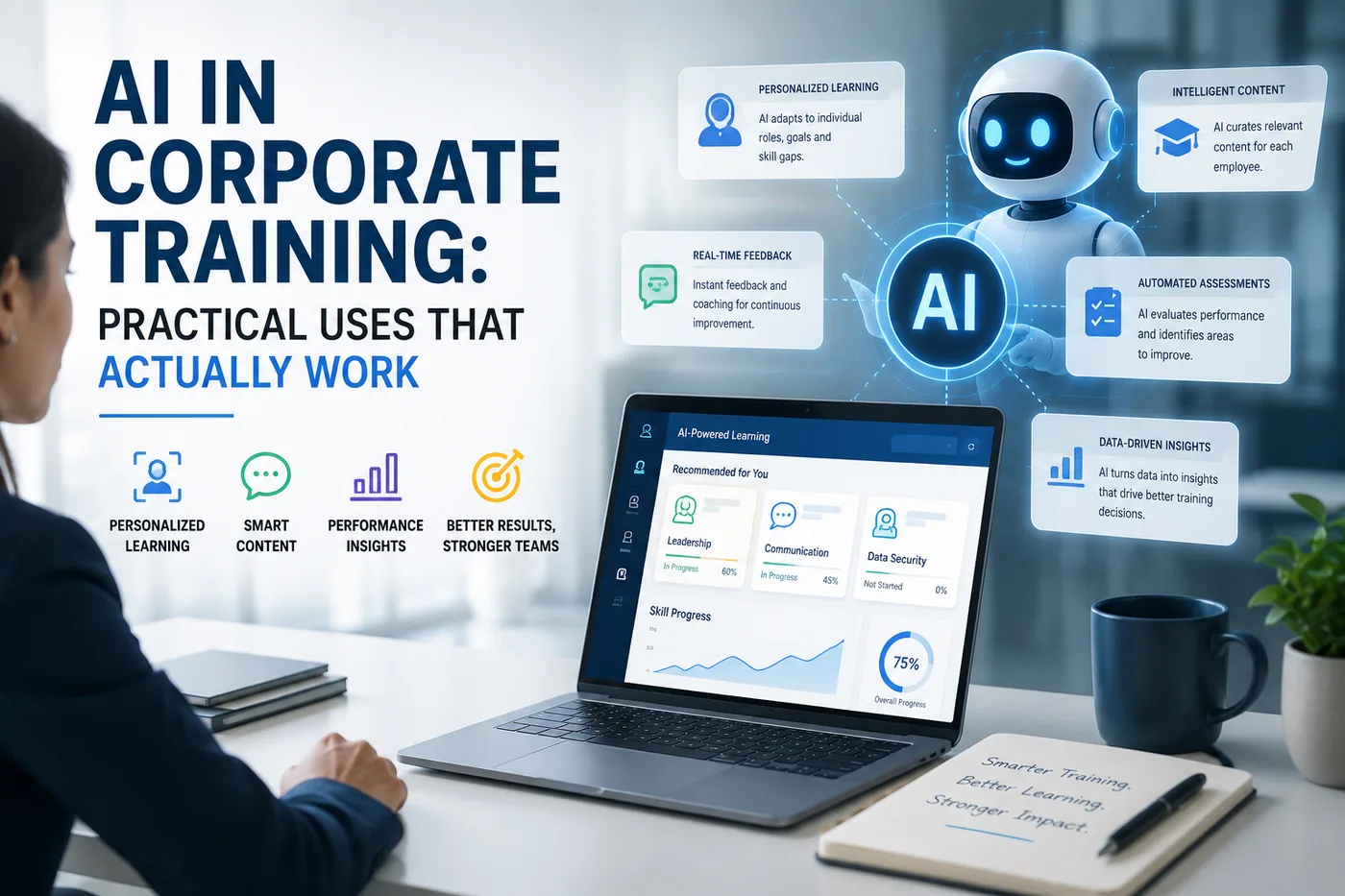
AI in Corporate Training: Practical Uses That Actually Work
 Serve Innovate
7 min read
Serve Innovate
7 min read
Most AI pitches to L&D teams promise personalisation at scale. The applications that have actually held up in production are narrower, less exciting, and considerably more useful than that.
Drafting, not authoring
The highest-return use of AI in learning teams today is unglamorous: producing first drafts of things instructional designers currently write by hand. Assessment question banks from source material. Scenario variations around a decision point. Summaries and job aids derived from a finished module. Alt text drafts for a large image library.
The value comes from the ratio. A designer writing thirty scenario variants from scratch is a two-day task; editing thirty drafted variants is a two-hour one, and the quality ceiling is set by the editor rather than the generator.
The condition attached is non-negotiable: a subject-matter expert reviews everything before it reaches a learner. Generated training content is confidently wrong in exactly the way that is hardest to detect — plausible, well-structured, and incorrect on a specific regulatory detail. In compliance or safety content, that is not a quality issue, it is a liability.
Conversational practice at a scale that was never affordable
This is the application with the clearest advantage over what came before. Skills like handling an objection, delivering difficult feedback, or de-escalating an angry customer are learned through repeated practice with feedback — and that has historically meant role-play with a facilitator, which is expensive and therefore rationed to a day or two a year.
An AI role-play partner removes the rationing. A sales representative can run the same difficult conversation twenty times, varying their approach, at eleven at night, without another person’s calendar being involved.
It works when scoped carefully:
- Constrain the scenario tightly — a defined persona, situation and objective, not an open conversation.
- Assess against an explicit rubric the learner can see, so feedback is comparable across attempts.
- Keep transcripts available to the learner and, with consent, to their coach. The conversation log is where the coaching value sits.
- Position it as practice, never as assessment of record. Scoring someone’s job performance on a model’s judgement is a fight you do not want.
Adaptive paths — real, but oversold
Adaptive learning genuinely works when there is a well-mapped body of knowledge with clear prerequisite relationships, and enough learners to generate signal. Product knowledge, technical certification, language learning and onboarding curricula all qualify.
It works far less well where vendors most enthusiastically sell it: soft-skills programmes, leadership development, and anything where "mastery" is a judgement rather than a measurement. If you cannot state what evidence would prove a learner has mastered a unit, an adaptive engine has nothing to adapt on and will fall back to sequencing by quiz score, which is not personalisation.
A reasonable test before buying: can your team draw the prerequisite map for one course on a whiteboard? If not, the engine cannot infer one either.
Localisation at a cost that changes what is possible
AI translation has moved training localisation from a budget question to a review question. Rolling a course out in eight languages used to mean eight vendor engagements and a timeline measured in months. It now means eight machine drafts and eight native-speaker review passes.
The review pass is still mandatory, and for a specific reason: what fails is rarely grammar. It is terminology that is technically correct but wrong in context — a regulatory term with a specific legal meaning in one jurisdiction, a job title that does not exist in that market, an example that assumes an unfamiliar workplace convention.
Budget roughly a quarter of the previous localisation cost, mostly spent on reviewers rather than translators, and expect a genuine improvement in how many markets you can afford to serve properly.
Three things to refuse
- Automated competency decisions. Using a model to determine whether an employee is certified, promoted or cleared for a safety-critical task creates an accountability gap. When the decision is challenged — and it will be — someone has to be able to explain it.
- Uploading confidential material to consumer tools. Internal policy documents, customer data and unreleased product information routinely end up pasted into public chat interfaces by well-meaning designers. Set a clear tooling policy and provide an approved alternative, because prohibition without an alternative simply moves the behaviour out of sight.
- Generated content published without SME sign-off. The efficiency gain is entirely in the drafting. Removing the review does not double the saving, it converts a productivity tool into an unreviewed publishing pipeline.
The short version
AI is worth deploying in L&D where it removes a bottleneck that was previously about human throughput: drafting volume, practice availability, translation cost. It is worth resisting where it substitutes for a judgement someone needs to be accountable for.
Start with one workflow, measure the hours actually saved against the review hours added, and expand from evidence rather than from the pilot’s enthusiasm.
Serve Innovate
We design, build, market and scale digital experiences — e-learning, websites, campaigns and custom software — for organizations that want one accountable partner rather than four.
Work with usFrequently asked
Can AI replace instructional designers?
Is AI-generated training content safe for compliance courses?
What is AI role-play in corporate training?
Does adaptive learning actually improve outcomes?
How should we handle confidential data when using AI in L&D?
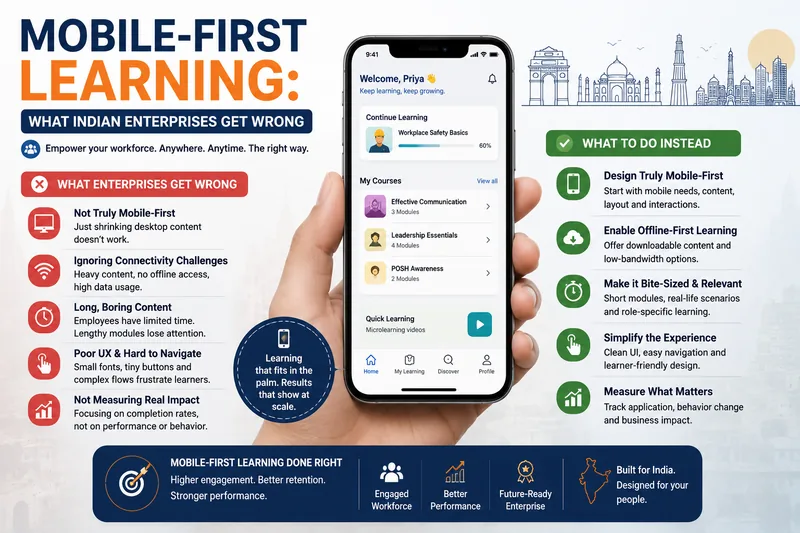
Mobile-First Learning: What Indian Enterprises Get Wrong
Your workforce is on a mid-range Android phone with patchy data. Most corporate learning is still designed on a laptop, for a laptop.
Read article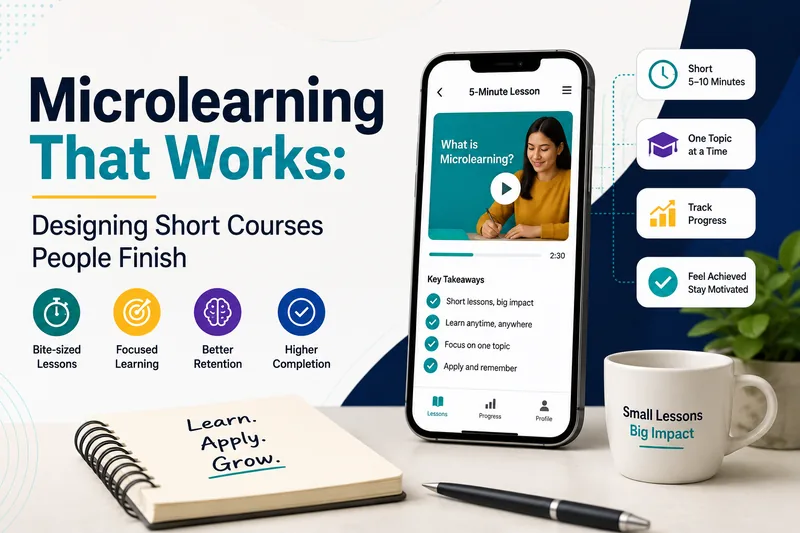
Microlearning That Works: Designing Short Courses People Finish
Cutting a two-hour course into twelve ten-minute videos is not microlearning. This is what actually makes short-form corporate training stick.
Read article