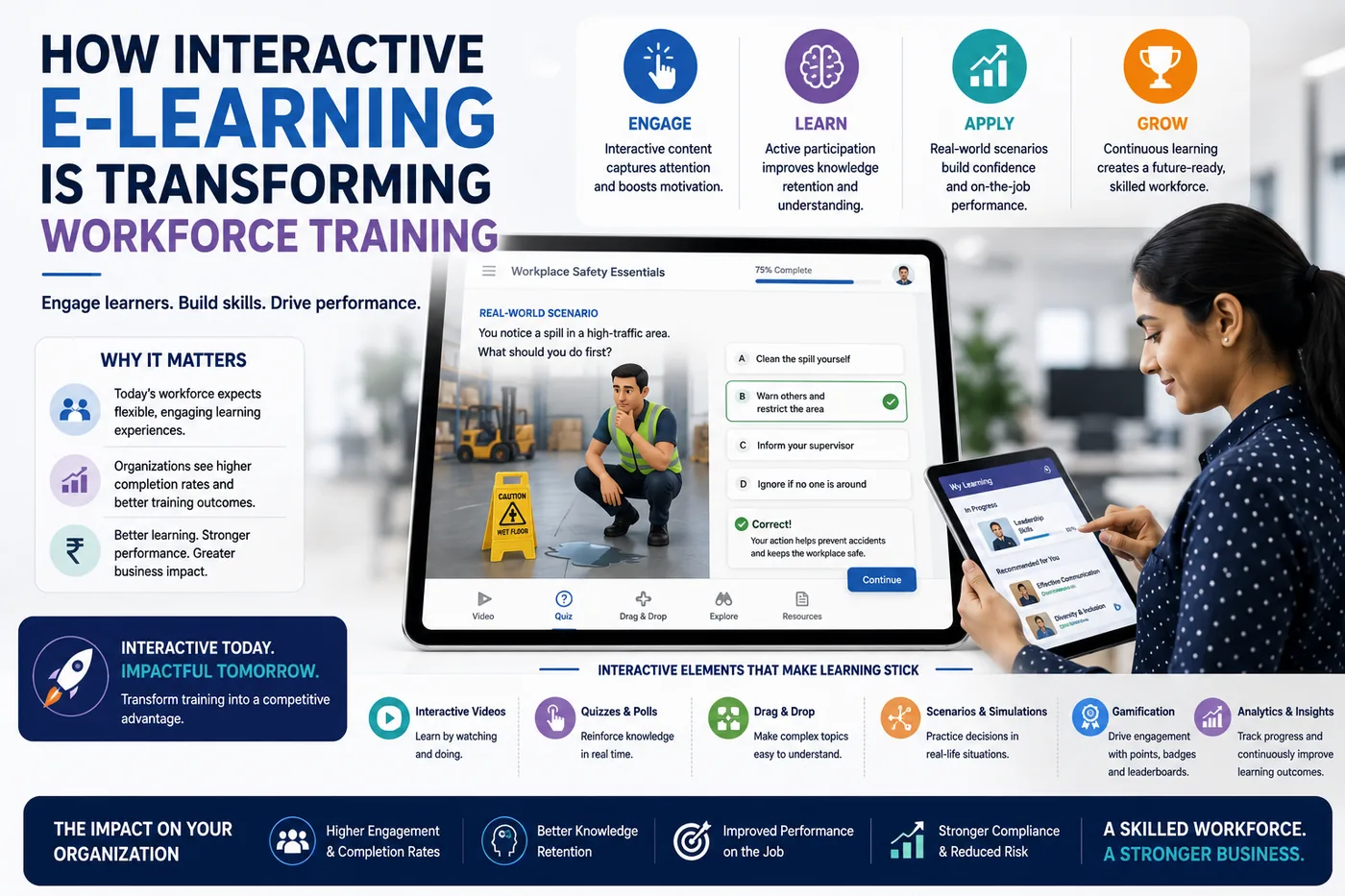
How Interactive E-Learning Is Transforming Workforce Training
 Serve Innovate
7 min read
Serve Innovate
7 min read
Modern workforce training is evolving rapidly as organizations move away from passive content. Slide-after-slide courses and click-to-continue modules are giving way to interactive experiences that ask learners to think, decide, and practice — the way real work actually happens.
For years, "training" meant sitting an employee in front of a linear presentation and hoping something stuck. It rarely did. When learning is passive, attention drifts, retention drops, and the skills a course was meant to build never quite make it back to the job. The shift now underway is simple to state and hard to fake: turn learners from spectators into participants.
Why passive training falls short
Passive content treats people as containers to be filled. It front-loads information, tests recall at the end, and calls a high completion rate a success. But completion is not competence. A learner can finish every slide and still freeze the first time they face a real customer, a real system, or a real decision under pressure.
- Low retention. Information delivered without application fades quickly.
- Weak transfer. Knowing a policy is not the same as applying it in a live situation.
- Disengagement. Without stakes or interaction, attention wanders and drop-off climbs.
Planning a course or a learning programme? See our custom e-learning development services.
What "interactive" actually means
Interactivity is not animation for its own sake, and it is not a quiz bolted onto the end. Genuine interactivity puts the learner in the driver's seat: they make choices, see consequences, and adjust. The most effective interactive e-learning is built around doing, not just reading.
The goal isn't to make training prettier. It's to make it behave like the job — so the skill is already rehearsed before it's needed.
The building blocks we rely on
- Branching scenarios that drop learners into realistic situations where their decisions shape the outcome.
- Gamified challenges — points, streaks, and levels — that make progress visible and motivating.
- Microlearning that breaks skills into focused, mobile-friendly moments people can finish between tasks.
- Simulations that let learners practice high-stakes work in a safe, consequence-free environment.
- Adaptive paths that adjust difficulty and content to what each learner already knows.
Measuring what actually matters
If completion rates are the only metric, training is measuring attendance, not impact. Interactive e-learning — especially when packaged with SCORM or xAPI and connected to your LMS — lets you track the decisions learners make, where they hesitate, and which skills need reinforcement. That data turns training from a one-time event into a system that keeps improving.
The metrics worth watching sit closer to the business: fewer errors on the floor, faster onboarding, higher first-call resolution, better compliance outcomes. When a course changes those numbers, it has earned its place.
How Serve Innovate approaches it
We start with a needs analysis to pin down the behavior each module must drive, storyboard the learning journey around real scenarios, build the interactivity and media, package it for SCORM/xAPI with full QA, and then track learner data to keep refining. The result is training measured against performance goals — not completion certificates.
The takeaway
Interactive e-learning works because it respects how people actually learn: by doing, deciding, and getting feedback. As workforces grow more distributed and skills expire faster, the organizations that treat learning as an experience — not a document to be read — are the ones whose teams are ready when it counts.
Serve Innovate
We design, build, market and scale digital experiences — e-learning, websites, campaigns and custom software — for organizations that want one accountable partner rather than four.
Work with usFrequently asked
What is interactive e-learning?
Is SCORM or xAPI better for tracking?
What is the difference between interactive e-learning and traditional online training?
How do you keep learners engaged in mandatory compliance training?
What completion rate should we expect from workforce training?
How long should an e-learning module be?
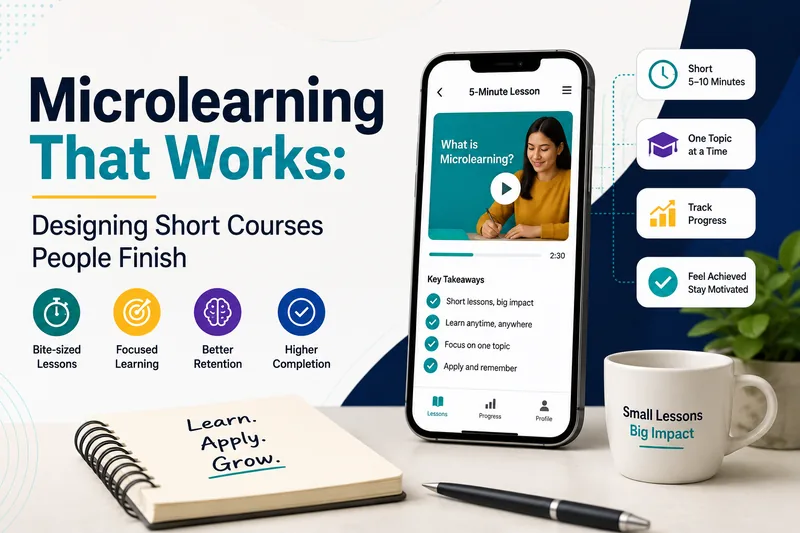
Microlearning That Works: Designing Short Courses People Finish
Cutting a two-hour course into twelve ten-minute videos is not microlearning. This is what actually makes short-form corporate training stick.
Read article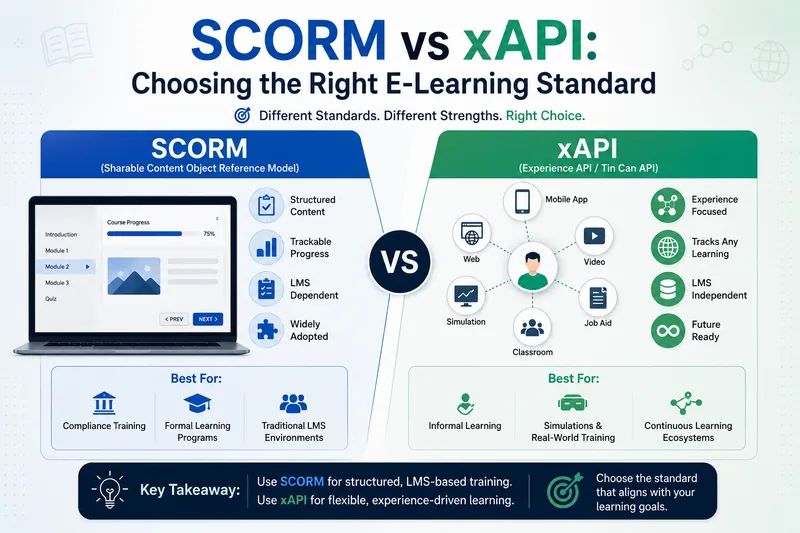
SCORM vs xAPI: Choosing the Right E-Learning Standard
One tracks whether a course was completed. The other tracks what a person actually did. Choosing wrongly costs you either data or years of rework.
Read article