SEO and Paid Media: Building a Compounding Growth Engine
 Serve Innovate
7 min read
Serve Innovate
7 min read
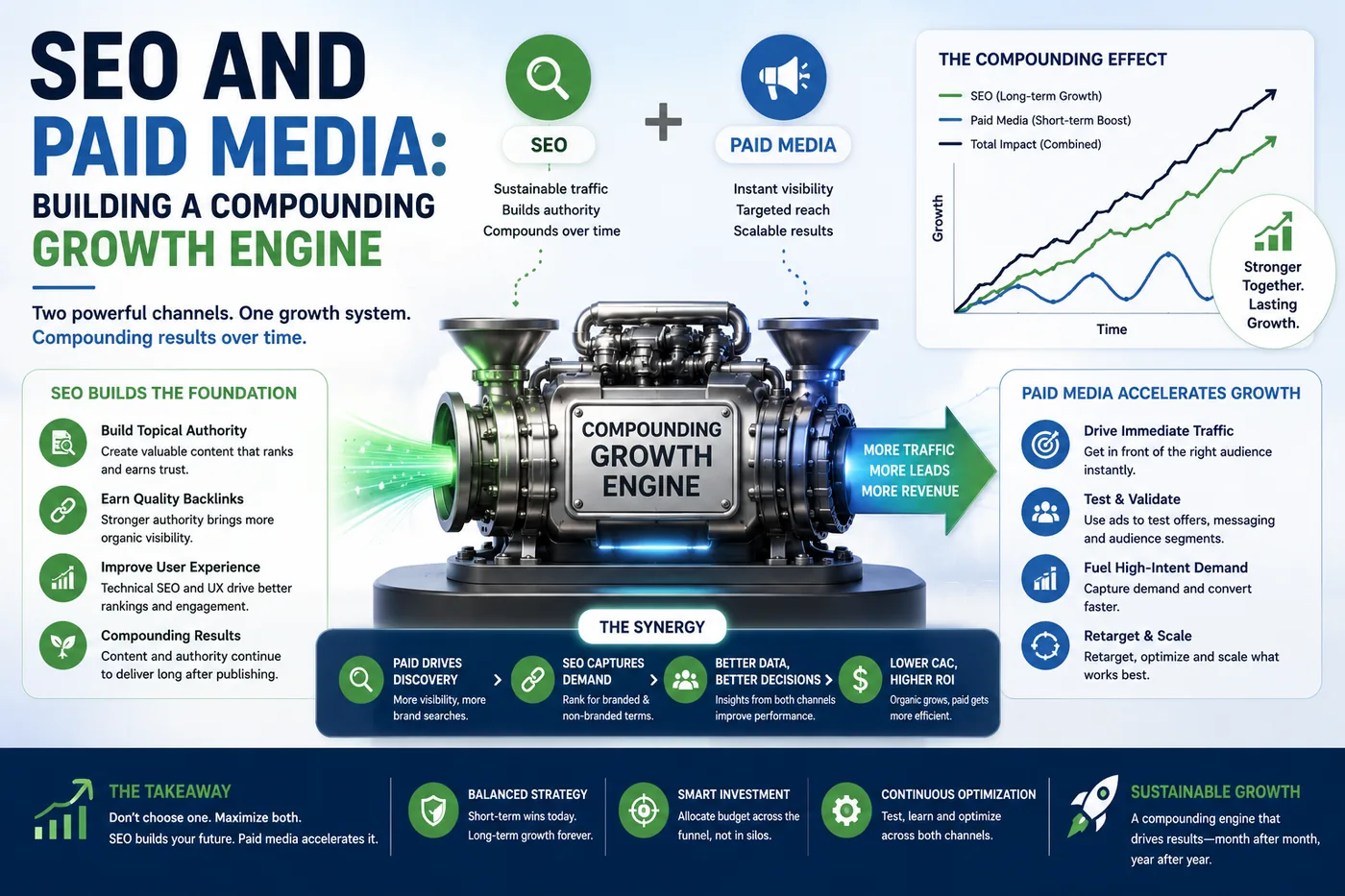
Most organizations run SEO and paid media as separate programs with separate budgets, separate reporting, and separate agencies. That structure quietly guarantees you pay twice for the same learning.
They run on different clocks — that's the point
Paid media buys attention immediately and stops the moment the budget does. SEO compounds slowly and keeps returning long after the work is done. Treated as competitors, one always looks better in a given quarter. Treated as a system, each covers the other's weakness: paid provides speed and certainty while organic builds, and organic reduces the volume you have to buy once it does.
Paid media rents demand. SEO buys the asset. A serious program does both, deliberately, with the same data.
Want help putting this into practice? See our SEO and digital marketing services.
Where the compounding actually happens
The gains come from shared data, not shared branding. Three flows matter most:
- Paid search query data into content strategy. Search terms reports tell you, with money attached, exactly which phrasings convert. That is a far better content brief than a keyword tool's volume estimate.
- Ad copy testing into title tags and meta descriptions. You can test twenty headline variants in a week on paid, then apply the winner organically where testing would take a quarter.
- Organic rankings into bid strategy. Where you already hold the top organic position for a term, bidding hard on it often buys clicks you would have got free. Where you rank poorly on a high-intent term, that is exactly where paid earns its budget.
Structure both around intent, not channel
Group your keywords by what the searcher is trying to do, then decide the channel per group.
| Intent | Best served by | Measured on |
|---|---|---|
| Informational — "what is…", "how to…" | Organic content | Assisted conversions, email capture |
| Commercial — "best…", "vs", "pricing" | Organic + selective paid | Qualified leads |
| Transactional — "buy", "hire", "near me" | Paid, defended organically | Cost per acquisition |
| Branded | Organic, paid defensively | Share of voice |
Attribution honesty
Last-click attribution systematically overstates paid search and understates everything that created the demand in the first place. You do not need a perfect model — you need one everyone agrees to before the reporting starts. Pair a data-driven or position-based model with a periodic holdout test: pause a paid campaign in one region and measure what actually happens to total conversions. The answer is frequently uncomfortable and always useful.
The technical floor
None of this works on a site search engines cannot crawl or users will not wait for. Before the strategy layer, the fundamentals have to hold: one canonical URL per page, real indexable pages rather than JavaScript-routed views, clean internal linking, valid structured data, and Core Web Vitals within thresholds. A great content program on a broken technical foundation underperforms a mediocre one on a sound foundation, every time.
How we run it
We audit the technical foundation first, then build a single intent-mapped keyword universe that both channels work from, share creative learnings in both directions, and report on blended cost per qualified lead rather than channel-level vanity metrics.
What to do first
Export your paid search terms report, find the converting queries you have no organic page for, and build those pages. It is the highest-return, lowest-risk move available to almost every organization running both channels — and it typically pays back within a quarter.
Serve Innovate
We design, build, market and scale digital experiences — e-learning, websites, campaigns and custom software — for organizations that want one accountable partner rather than four.
Work with usFrequently asked
Should I invest in SEO or Google Ads first?
How long does SEO take to show results?
What is a good return on ad spend?
How do SEO and paid search work together rather than competing?
Should we bid on our own brand name?
How much content do we need before SEO starts working?
Local SEO for Indian Businesses: Ranking in Your City
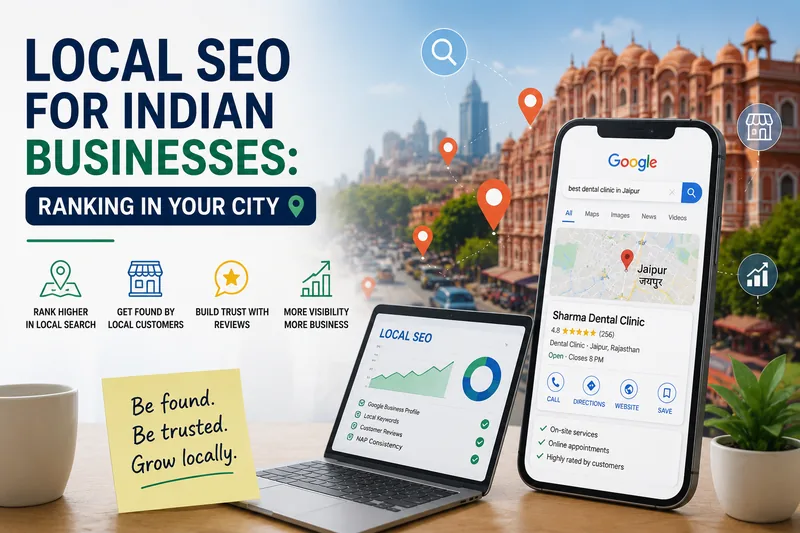
Local search is where intent is highest and competition is most beatable. Most businesses lose it on details that take a week to fix.
Read article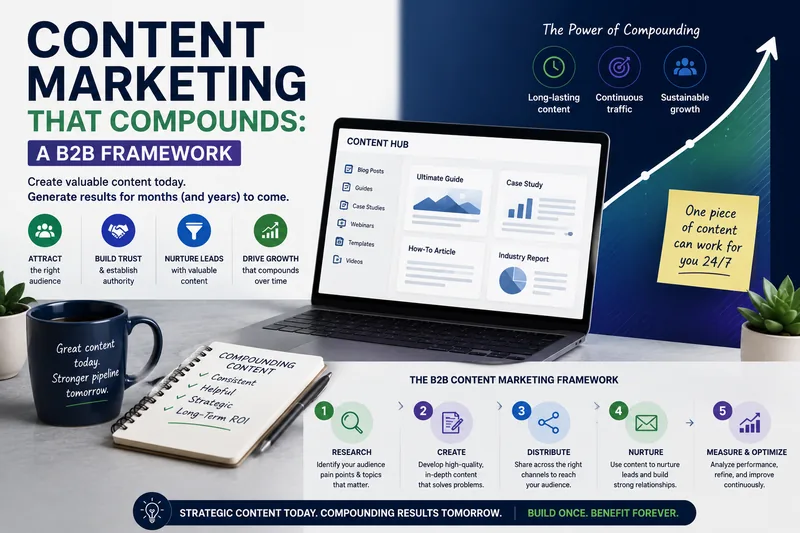
Content Marketing That Compounds: A B2B Framework
Publishing more is not a strategy. A small set of pages that answer buying questions properly will outperform a blog nobody reads.
Read article